International gold price surges and fluctuates sharply, precious metals collectively rally: Deep logic and investment insights
Introduction
Since 2026, the global precious metals market has witnessed a magnificent rally. Driven by strong buying, the international gold price climbed all the way to the historic level of $5,100 per ounce, then suddenly experienced a "roller-coaster" pattern with daily swings exceeding $100. At the same time, other precious metals such as silver, platinum, and palladium also hit new cyclical highs. What capital logic lies behind this collective frenzy? How should investors position themselves amid high-level volatile markets? This article will deeply analyze the driving forces behind this round of precious metal gains from three dimensions: macroeconomic, geopolitical, and market structure, providing rational reference for investors.
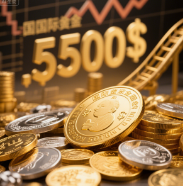
1. Gold price spikes then falls: Market game at historic highs
From moderate gains at the beginning of the year to an accelerated breakout in May, the international gold price shot from around $4,500 to $5,100 in just a few weeks, a gain of more than 13%. However, after the peak, the market quickly fell into a tug-of-war between bulls and bears: on one hand, profit-taking and short-covering by futures bulls triggered a technical pullback; on the other hand, the geopolitical risk premium has not fully faded, and bargain buying remains active. This pattern of "sharp rise - violent shock" essentially reflects deep divergence over the future path of interest rates and safe-haven demand.
Notably, the new gold price high is not an isolated event. Silver prices broke above $38 per ounce, hitting a near-decade high; platinum and palladium also rose in tandem. The collective resonance of precious metals indicates that the speculative logic at the single-asset level is insufficient to explain it; there must be systemic macro forces behind it.
2. Deep-seated causes: Triple forces resonance
1. Fed policy pivot expectations and weakening dollar credit
Since the end of 2025, US economic data has shown clear signs of cooling, and market expectations for Fed rate cuts have continued to heat up. Lower real interest rates directly reduce the opportunity cost of holding gold, driving a large inflow of institutional funds into precious metal ETFs. At the same time, US government debt has exceeded $38 trillion, leading to increased market skepticism about the long-term credit value of the dollar. Central banks have continuously increased gold reserves for several consecutive years, with global central bank purchases exceeding 1,200 tonnes in 2025 – this is the core structural force supporting gold's bottom.
2. Long-term geopolitical risk premium
The prolonged Russia-Ukraine conflict, repeated Middle East tensions, and escalating global trade friction – the "normalization" of geopolitical uncertainty has repeatedly activated gold's safe-haven attribute. Unlike previous black swan events, current geopolitical risks have transformed from short-term shocks into persistent variables, and safe-haven asset allocation demand has shifted from emergency buying to structural accumulation. Gold, as the ultimate "ballast," has significantly increased its weight in institutional investment portfolios.
3. Accommodative monetary environment and inflation stickiness
Although major central banks have raised rates aggressively, the global broad money supply is still expanding, and inflation has shown unexpected stickiness. Although CPI has fallen from its highs, core indicators such as service prices and wage growth remain robust. As a traditional tool against inflation, gold has gained new buying logic against the backdrop of rising "stagflation" concerns. In addition, increased volatility in the cryptocurrency market has led some risk capital to return to traditional precious metals, further pushing up prices.
3. Future outlook: Beware of high-level volatility, pay attention to driver shifts
In the short term, gold prices near $5,100 are clearly overbought technically, and there is pressure for a correction. If Fed rate cut expectations are disappointed or international trade tensions ease, gold may face significant profit-taking pressure. However, from a medium- to long-term perspective, three major supports remain: the central bank gold purchase trend is unchanged, the global de-dollarization process deepens, and geopolitical frictions are difficult to fundamentally resolve. Therefore, gold prices are more likely to show a pattern of "high-level wide-range consolidation with a slowly rising center" rather than a unilateral decline.
4. Investor suggestions: Rational allocation, opportunistic positioning
-
Control positions, avoid chasing rises and selling falls: Current gold prices are in a historically high range with significantly amplified volatility. Ordinary investors should not bet all funds on a single asset; it is recommended that allocation does not exceed 10%–15% of total assets.
-
Build positions in batches, buy on dips: If long-term bullish on gold, one can gradually build positions during pullbacks to the $4,800–$4,900 range, avoiding a one-time purchase at highs.
-
Pay attention to alternative assets: Silver, platinum, and other varieties have greater elasticity but also higher risk. Investors can choose precious metal ETFs or physical gold bars based on their risk preferences.
-
Maintain macro sensitivity: Closely monitor US CPI data, Fed meetings, and the evolution of geopolitical events, as these variables may trigger directional reversals in the market.
Conclusion
The international gold price hitting $5,100 and then experiencing a $100 swing reflects both extreme market sentiment and the deep anxiety of global assets seeking an anchor amid uncertainty. The collective rise of precious metals is not accidental but the product of triple resonance among policy, geopolitics, and currency. For rational investors, rather than chasing short-term ups and downs, it is better to deeply understand the cyclical logic and seize structural opportunities amid volatility. Only in this way can one stabilize and go far in the "golden age" of precious metals.