Title: Vietnamese Enterprises Enter H2: When Execution Speed Becomes a Survival Advantage
Keywords: Vietnamese enterprises, cash flow, energy costs, supply chain, liquidity, risk management, working capital, inflation, PwC Vietnam, operational transformation
Introduction
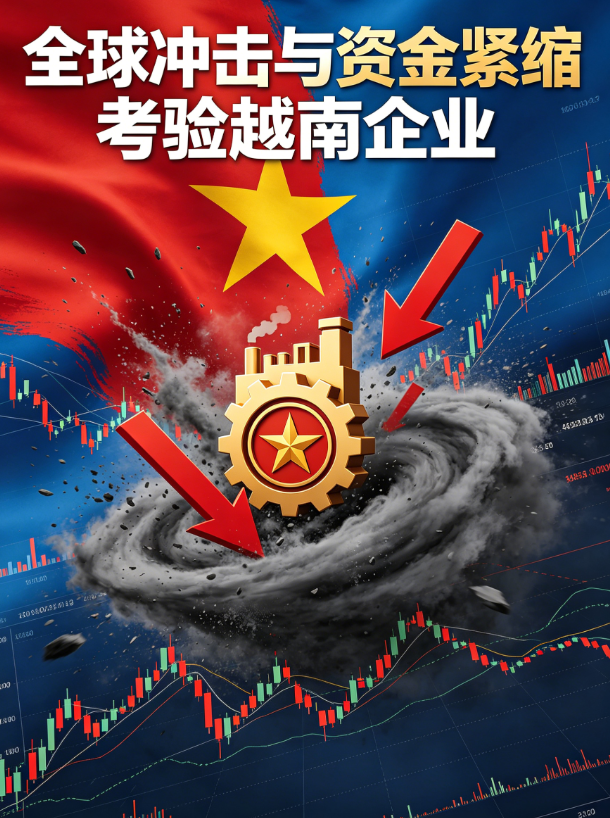
As we enter the second half of the year, Vietnamese enterprises face an unprecedentedly complex operating environment. Rising energy costs, tightening market liquidity, and supply chain disruptions are not truly ending but becoming more persistent and unpredictable. In this context, survival no longer depends on whether a company knows what to do, but on how fast it can execute.
Ms. Pratiksha Banti, Senior Director of Transaction Transformation at PwC Vietnam, says the companies most resilient to volatility are often not those with the most sophisticated strategies, but those that act earliest and most decisively. This reflects an important reality: when the market remains unstable, delay itself is a cost.
Multiple Pressures: Not a Single Shock
One of the biggest concerns for Vietnamese enterprises today is that risks are no longer appearing as single major events but as the overlap of multiple pressures. Rising fuel and logistics costs are eroding profit margins. Higher interest rates and tighter credit conditions make financing more difficult. Meanwhile, customers are under the same pressure, leading to fewer orders and longer payment cycles.
Mr. Mohamed Mudasir, Director of Transaction Advisory at PwC, says the mechanism itself is not complicated, but it becomes very powerful when layered. Higher input and transportation costs are pressuring the entire value chain. Although oil prices have fallen from their peaks, longer shipping routes, fuel surcharges, and insurance costs have not decreased correspondingly. At the same time, companies face higher borrowing costs, slower cash inflows, and rising inventories.
The result is a lengthened cash conversion cycle. In other words, companies must tie up more capital in inventory and accounts receivable, reducing actual cash available for operations. For industries like manufacturing, retail, and logistics, this continuously squeezes their ability to pay.
Oil Prices, Inflation, and Their Chain Reactions
Amid global geopolitical uncertainty, the anxiety of Vietnamese enterprises is more pronounced. At the start of the year, many 2026 business plans were based on an oil price assumption of about $66 per barrel. However, tensions in the Middle East pushed Brent crude to surge to $117 per barrel due to blockage of key shipping lanes. Although prices later fell, they remain significantly above the beginning of the year.
This is not just short-term volatility. Vietnam is highly dependent on imported oil, with about 85% of its crude oil demand coming from abroad. This means every change in the global energy market quickly translates into domestic production, transportation, and distribution costs.
This pressure is already visible in macro data. Core inflation in May rose 5.6% year-on-year; average inflation since the start of the year is also significantly higher than the same period last year. When inflation remains high, consumers tend to spend more cautiously, while companies must absorb additional input costs. This weakens both demand and supply, making the business environment more fragile.
Liquidity Becomes the Decisive Battlefield
In an environment with multiple adverse variables, the most important factor for a company is not just revenue or market share, but liquidity. Even if a company shows profit on its books, if funds are tied up in inventory, overdue receivables, or assets that cannot generate cash flow in the short term, it may face cash pressure.
According to PwC, many Vietnamese companies have hidden cash that is not being effectively utilized in daily operations. Old unsold inventory, slow collections, and insufficient hedging against market risks are three common bottlenecks. When the economic environment changes, these bottlenecks quickly amplify into liquidity problems.
Mr. Mudasir emphasized that the key question is not whether a company is affected, but how much liquidity it can release from within. This is the crucial difference between passive and resilient organizations. In many cases, the advantage comes not from waiting for the market to stabilize, but from improving cash flow while the environment is still difficult.
For example, a company with annual revenue of $100 million that shortens its cash conversion cycle by 5 days could free up about $1.4 million in working capital. This is not just an accounting number; it is real capacity to maintain production, reduce reliance on borrowing, and prepare more room to handle the next shock.
Execution Speed is More Important Than Perfect Strategy
The repeated message from PwC experts is that companies do not lack awareness; they often lack execution speed. Measures like tightening accounts receivable, optimizing inventory, hedging against currency or commodity price risks, and improving cash flow visibility are not new. But their value lies in when they are implemented.
Ms. Banti pointed out that companies that successfully transform in a volatile environment typically take action when pressure is still visible and the business case is strong enough to build internal consensus. Once the market shows signs of stability, the sense of urgency weakens, and momentum for change fades. Many organizations have experienced this: the longer the delay, the higher the cost of change; the longer the wait, the smaller the room for action.
From a governance perspective, the lesson is not just what to do, but when to do it. If a company waits until resources are exhausted or until a shock forces action, it usually pays a much higher price: higher cost of capital, weaker bargaining power, and a significantly shorter restructuring window.
What Should Companies Do Now?
First, companies need to review the entire working capital cycle, not just focus on revenue or profit. Inventory management should be based on actual consumption data to avoid capital being tied up in unsold stock for too long. Accounts receivable collection processes should also be standardized by customer risk level, avoiding overly lenient payment terms in a tight liquidity environment.
Second, risk hedging should be considered part of financial strategy, not an incidental task. Volatility in oil prices, exchange rates, transportation costs, or input prices directly affects profit margins. Companies need to monitor risks more regularly and consider hedging instruments appropriate to their size and risk tolerance.
Third, companies should strengthen real-time cash flow visibility. In a volatile environment, traditional financial statements often cannot reflect risks quickly enough. Management needs up-to-date information on cash inflows, outflows, maturing payables, inventory, and credit lines to make timely decisions.
Finally, and most importantly, establish a culture of action. An organization is truly resilient only when decisions are not hindered by overly long approval processes or unclear responsibilities. In periods where every day of delay can further damage cash flow, management speed becomes a real competitive advantage.
Conclusion
The second half of 2025 and the preparation for 2026 business plans will not be easy for Vietnamese enterprises. High energy costs, tighter credit, unstable supply chains, and persistent inflation are creating an environment where liquidity determines whether a company can hold its ground.
However, the situation is not entirely bleak. Every challenge also brings an opportunity for restructuring. Companies that know how to free up working capital, manage risks early, and act quickly will have a clear advantage over others. As PwC experts emphasize, the difference between leaders and laggards is not whether they understand the problem, but how quickly they turn understanding into action.
In a volatile market, waiting is sometimes not a safe strategy but a risk. Companies that act earlier can not only protect cash flow but also build a stronger foundation to deal with future uncertainties.